

What a new player should learn first
This Ghost Driver beginner guide starts with the part that matters more than buying a fast car: learning how the game asks you to drive. Ghost Driver is a Roblox highway traffic-cutting experience where speed only becomes useful when you can read traffic early enough to keep the run alive. The official game description currently lists W, A, S and D or the arrow keys for driving, V for changing camera or first person, Shift for the handbrake or drift input, and L for headlights. Those controls are simple, but combining them at highway speed takes practice. A new player should spend the first few sessions building predictable steering and braking habits instead of forcing risky gaps every few seconds.
The central idea of this Ghost Driver beginner guide is consistency. A clean run gives you more time to understand closing speed, lane movement and how your current car reacts when you make a sudden correction. A crash-heavy run produces almost no useful feedback because you cannot tell whether the problem was the car, the camera, the speed or your steering. Start slower than you think you need to, watch what happens around two or three vehicles ahead, and increase your pace only after your reactions stop feeling rushed. That approach makes every later part of Ghost Driver easier because traffic cutting is built on anticipation rather than panic.
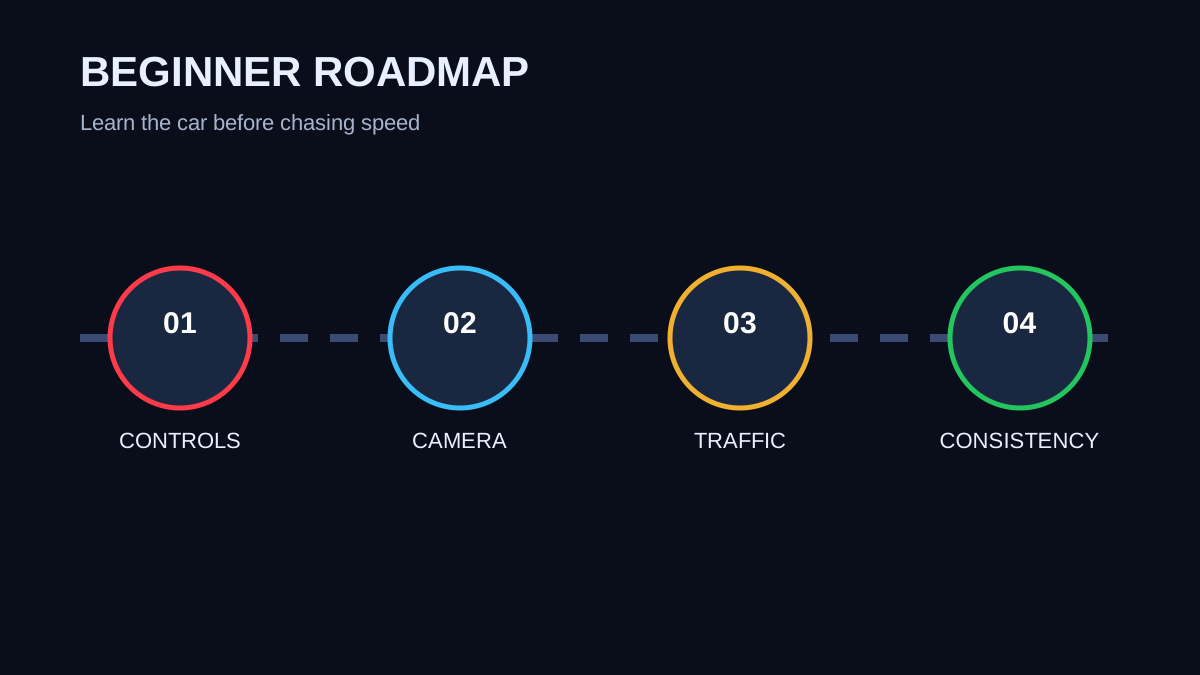
Learn the controls before chasing top speed
A useful Ghost Driver beginner guide should make the controls practical rather than simply listing keys. Steering inputs should be small at first because a large correction at high speed can send the car across more than one lane. Try holding a steady lane, making a single controlled lane change, then returning to the original lane without touching traffic. Repeat that sequence until you can do it without staring at the car. Once steering becomes automatic, add braking practice. Learn how much distance your current car needs to slow down before a closing gap disappears. That distance is more important than any theoretical top-speed number during your first hour.
Camera choice also changes how the game feels. Press V and test the available views on the same stretch of road. Some players judge lane width better from a wider exterior camera, while others prefer first person because it makes closing speed easier to sense. The Ghost Driver beginner guide recommendation is not to copy another player’s camera automatically. Use the view that lets you see the next decision soonest. You should be able to identify the vehicle in front of you, the open lane beside it and the next potential obstacle without swinging the camera around. If a view looks exciting but hides too much traffic, it is a poor learning camera.
- Hold one lane at moderate speed.
- Practice one clean lane change at a time.
- Test braking distance before entering dense traffic.
- Press V and compare camera views on the same road section.
- Add the Shift handbrake input only after normal steering feels predictable.
Read traffic two decisions ahead
The most important driving habit in this Ghost Driver beginner guide is looking beyond the nearest gap. New players often focus on the empty space directly in front of the car and only discover the next blocked lane after they have already committed. Instead, read traffic as a chain of decisions. If the left lane is open now, ask what is waiting in that lane after the pass. If the center lane is closing, check whether you still have a safe route back before moving out. This reduces last-second steering and makes your line much smoother. Smooth inputs are not just visually cleaner; they preserve more options when traffic changes.
Closing speed matters as much as lane position. Two cars can appear far apart but become a problem almost immediately if you are travelling much faster. The Ghost Driver beginner guide method is to mentally rank gaps as comfortable, temporary or already closing. Comfortable gaps give you time to move and stabilize. Temporary gaps are usable only if the next lane is already clear. Closing gaps should be treated as blocked even when they still look visually open. This simple classification keeps a beginner from gambling on every opening and teaches the same traffic-reading skill needed for faster cars later.
Build clean runs before risky runs
A Ghost Driver beginner guide should give you a way to measure improvement. Do not use one spectacular near miss as your benchmark. Use a repeatable clean-run target. Pick a stretch you can recognize and try to complete it several times without contact. When you can finish the same section reliably, increase your speed slightly or add one more aggressive traffic cut. This creates a clear progression ladder: survive first, stabilize second and only then add risk. The result is faster long-term improvement because you always know which variable changed between attempts.
When a run fails, identify one cause instead of changing everything. If you entered a gap too late, work on earlier decisions. If you overcorrected after a lane change, reduce steering input. If you could not see the next car, reconsider the camera. The Ghost Driver beginner guide rule is one problem, one adjustment, one retest. That turns mistakes into useful data rather than frustration. Experienced traffic-cutting players appear fast because many small decisions are already automatic. Your goal is to automate the safe decisions first so that higher speed does not create more mental load than you can handle.
Spend early cash with a purpose
Progression can tempt a new player to spend every time the cash balance increases, but this Ghost Driver beginner guide recommends waiting until you can describe what your current car is failing to do. If the car is stable enough for your present routes, a more expensive vehicle may not improve your results immediately. Save until an upgrade solves a real limitation such as weak acceleration after slowing, poor stability during lane changes or a performance ceiling you can consistently reach. A purchase is easier to evaluate when you know what problem it was supposed to solve.
The same principle applies to tuning. Do not stack several changes and then decide the car feels better. Keep a baseline, change one setting and repeat the same road section. Ghost Driver is in active development, so balance can shift between updates and community numbers can become outdated. The Ghost Driver beginner guide approach is to treat all non-official vehicle data as a starting point. Re-check important values in game before spending a large amount of cash, and keep enough money available for the next clearly useful car rather than chasing every new option in the garage.
A practical first-session plan
Use this Ghost Driver beginner guide as a simple first-session checklist. Spend the opening minutes testing controls and camera views at a pace where you can recover from mistakes. Next, practice lane changes without trying to squeeze through narrow traffic. After that, complete several clean road sections while deliberately reading two gaps ahead. Only when those runs feel repeatable should you start adding the handbrake or more aggressive traffic cuts. Finish the session by reviewing which situations caused crashes most often. That gives you one specific skill to work on next time instead of starting every session without a plan.
The fastest beginner progression is not a secret car or a single trick. It is the ability to make the same good decision repeatedly. This Ghost Driver beginner guide therefore prioritizes vision, steering discipline, braking distance and spending decisions before raw speed. Once those fundamentals are stable, the money-farming, tuning and traffic-cutting guides become much more useful because you can test their recommendations consistently. Ghost Driver rewards confidence, but useful confidence comes from knowing what your car will do and what the traffic is likely to do next. Build that foundation first and higher-speed runs become much easier to control.
- Learn every basic control.
- Choose the camera that reveals traffic earliest.
- Complete three clean road sections.
- Practice reading two gaps ahead.
- Identify one repeated crash cause.
- Spend cash only when a purchase solves a measured limitation.