

What Ghost Driver song IDs actually are
Ghost Driver song IDs are Roblox audio asset identifiers used when an experience provides a field or system that can play permitted audio. The important word is permitted. A numeric ID existing on Roblox does not automatically mean the audio can play inside every experience. Ownership, privacy settings, permissions and moderation can all affect availability. That is why lists of Ghost Driver song IDs can become outdated even when the number itself has not changed.
This Ghost Driver song IDs guide focuses on verification rather than publishing a huge untested list. If you find an ID on another site, treat it as a candidate to test rather than a guaranteed working track. Roblox has changed audio access rules over time, and developers can also change how their own experience handles audio. A useful list therefore needs regular checking and clear notes about what was tested, when it was tested and whether playback actually worked in Ghost Driver.
How to test a Roblox audio ID
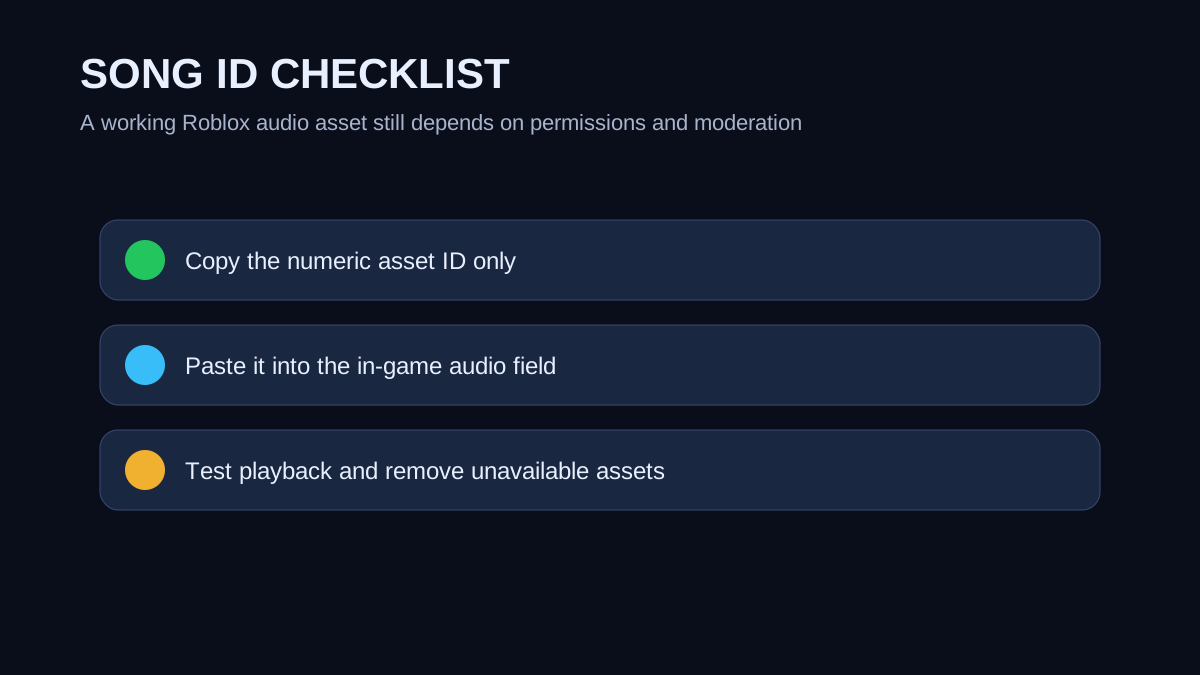
When testing Ghost Driver song IDs, copy only the numeric asset ID. Extra URL text, spaces or unrelated characters can make a valid asset look broken. Paste the number into the audio field available in the experience, then test at a safe volume. If nothing plays, do not immediately assume you copied the wrong number. Check whether the asset still exists and whether its permissions allow it to be used by the experience.
A careful Ghost Driver song IDs workflow tests one ID at a time. Keep the result simple: working, unavailable, private or unknown. If the same ID stops playing later, update the status instead of leaving it on a “working” list forever. This makes the page more useful than a long collection copied from old Roblox music lists. The goal is reliable Ghost Driver song IDs, not the largest possible number of entries.
- Copy the numeric Roblox audio asset ID.
- Paste only the number into the in-game audio field.
- Test playback at a safe volume.
- Check the asset status if nothing plays.
- Remove or mark IDs that are private, moderated or unavailable.
Why a Ghost Driver song ID can stop working
The most common reason Ghost Driver song IDs fail is that audio access is not universal. An asset can be private, restricted to an owner or experience, removed through moderation, or otherwise unavailable to Ghost Driver. That means an ID can work in one Roblox experience and fail in another. It can also work today and become unavailable later. Any guide that promises permanent playback is ignoring how Roblox audio permissions actually work.
When a Ghost Driver song IDs entry fails, check the status before replacing it with another random number. Repeatedly trying copied IDs from old lists can waste more time than verifying a smaller set. If an asset has permission restrictions, the problem is not something the player can fix through spelling or capitalization. Mark it unavailable and move on. A transparent status is more valuable than pretending every popular Roblox audio number is supported.
Avoid misleading copied music lists
Many pages that target Ghost Driver song IDs are tempted to reuse generic Roblox music ID lists. That approach creates a poor user experience because the page may contain dozens of tracks that were never tested in Ghost Driver. A song being popular on Roblox does not establish compatibility with this experience. This guide therefore separates known game information from third-party audio candidates and avoids claiming that an unverified asset definitely works.
If community members submit Ghost Driver song IDs, the best process is to record the asset number, test date and result. That gives future readers useful context when permissions change. It also makes it easier to remove duplicates and outdated entries. A smaller verified list can outperform a giant copied list because users can trust the status labels and do not need to test fifty broken assets themselves.
What to do when an ID does not play
If Ghost Driver song IDs do not play, begin with the simplest checks. Confirm that you copied only the number, verify that the audio feature is currently available and try another known candidate to determine whether the issue affects one asset or the entire audio system. If every ID fails after an update, the game may have changed how audio works. In that situation, wait for current information instead of assuming all individual IDs are wrong.
If only one Ghost Driver song IDs entry fails, the asset itself is the more likely cause. Check whether it remains public and whether Roblox shows any availability restriction. Because permissions are controlled outside this guide, there may be nothing to repair locally. Mark the ID as unavailable and preserve the test date. That prevents the same broken item from being re-added later without verification.
How we maintain the song ID page
Our Ghost Driver song IDs policy is verification first. We do not upload copyrighted music, republish audio files or promise that a third-party asset will remain available. The page is intended to explain the ID system and document community-tested availability. When a working asset becomes private or moderated, its status should change. When Ghost Driver changes the audio interface, the instructions should change with it.
That approach makes Ghost Driver song IDs easier to maintain during Pre-Alpha development. Instead of chasing the biggest list, we focus on clear testing steps, honest status labels and recent verification. If you are looking for a specific track, remember that the track must still be available on Roblox and usable by the experience. An ID alone is not a guarantee. Treat every Ghost Driver song IDs result as time-sensitive and recheck it when playback matters.